
How Summer Heat Affects Your Garage Door (and How to Fix It)
Your garage door worked fine in April. Now it is August, and suddenly it groans on the way up, stops halfway, reverses for no reason, or ignores the remote until you are practically standing under it. Nothing hit it. Nothing broke. So what changed?
The heat changed. In this article you will learn about how summer heat affects your garage door, and how to fix any issues it may cause.
An attached garage with the door closed and no cooling runs 20 to 30 degrees hotter than the air outside. A 100 degree afternoon puts the inside of your garage past 120. Everything in your door system is sitting in that – the steel tracks, the grease in the bearings, the rubber seal, the plastic housing on your opener, and the circuit board inside it. Heat gets to all of them. Just differently.
Good news: a lot of this you can sort out yourself in an afternoon. The rest is worth knowing about so you can tell the difference between a fifteen minute fix and a real problem. Here is what August actually does to a garage door.
1. Metal Expands, and Everything Gets a Little Tighter
Steel grows when it heats up. Your tracks, rollers, hinges, and brackets are all steel, and a garage door is built to tight tolerances. On a hot day those parts swell slightly and the clearances they need shrink.
What you notice: The door feels like it is fighting you. Slower than usual. Binding at one particular spot. A scraping sound it never made in spring.
What to do: Look at the tracks with the door closed. A section that is visibly bent, dented, or pulling away from the wall is an alignment problem – heat is just making it obvious. Check that the bolts holding the track brackets are snug. Snug, not cranked, because overtightening pinches the track and you have traded one problem for another.
If the door binds in the same place every single time, the track needs adjusting, and that is a garage door repair call rather than a driveway fix.
2. Your Lubricant Either Ran Off or Turned to Glue
This is the most common cause of a noisy summer door, and it is the one most people solve themselves in twenty minutes.
Heat does two opposite things to lubricant. Fresh grease thins out and runs off the bearings and hinges where you actually need it. Old grease that has been collecting dust for years bakes into a hard sticky residue that adds friction instead of removing it. Either way you end up with metal rubbing metal.
What you notice: Squealing, grinding, or a rhythmic chirp as the rollers travel. The opener sounds like it is working harder than it should.
What to do: This one is genuinely yours. Wipe the tracks with a dry rag – do not lubricate inside the track, since grease in there just collects grit and makes things worse. Then hit the hinges, roller stems, springs, and bearing plates with a proper garage door lubricant, lithium or silicone based.
One thing to skip: WD-40. It is a solvent, so it strips the lubricant that is already there rather than adding any. Plenty of people reach for it because it is on the shelf. It makes the problem worse.
Run the door through a few cycles afterward to work everything in. If the noise is gone, that was it.

3. The Sun Blinds Your Safety Sensors
Two small photo eyes sit near the floor on either side of your door, sending an invisible beam across the opening. Break the beam and the door stops and reverses – exactly what you want if a kid or a bike is in the way. What you do not want is that beam getting confused by sunlight.
In late summer the sun sits low in the early morning and late afternoon, and it can shine straight into a photo eye lens and wash out the receiver. Heat also expands the sensor brackets, which is enough to nudge them out of alignment by the fraction of an inch that breaks the connection.
What you notice: The door starts down, stops, goes back up. Opener light blinking. It happens at certain times of day and works fine at others – that timing is your clue that sun angle is involved.
What to do: Start with a soft cloth on both lenses, because dust and spider webs cause this constantly. Then look at the indicator lights. Most sensors show a steady light when aligned and a blinking or dark light when they are not. If one is off, loosen its bracket, aim it at its partner until the light goes steady, and retighten.
Worth checking while you are down there: the Consumer Product Safety Commission puts photo eyes at 4 to 6 inches above the floor. If yours sit noticeably higher, mention it to a technician.
If it is purely sun glare at one time of day, a small hood or shield over the receiving eye solves it. And if you cannot get them to hold alignment, sensor realignment is standard opener repair work.
What not to do: never disable the sensors or tape them facing each other to force the door closed. They are the most important safety feature on the door.
4. The Opener Overheats and Shuts Itself Down
Garage door openers have thermal overload protection built in. That is a feature, not a defect – when the motor gets too hot it shuts down and refuses to run until it cools. In a 120 degree garage, a motor already working harder than it should does not have much margin left.
What you notice: The door works, then stops working, then works again an hour later. Or it quits after two or three cycles on a hot afternoon.
What to do: Here is the part most people miss. An overheating opener is usually a symptom, not the disease.
The motor is overheating because it is lifting more weight than it was built to lift, and that means the springs are losing tension and the door is no longer balanced. Your opener is supposed to guide a counterbalanced door, not deadlift it. So the fix is a balance check, not a new opener.
Replace an opener that overheated because of a spring problem and you get a second overheating opener. Worth having someone confirm the diagnosis before you spend money on hardware.
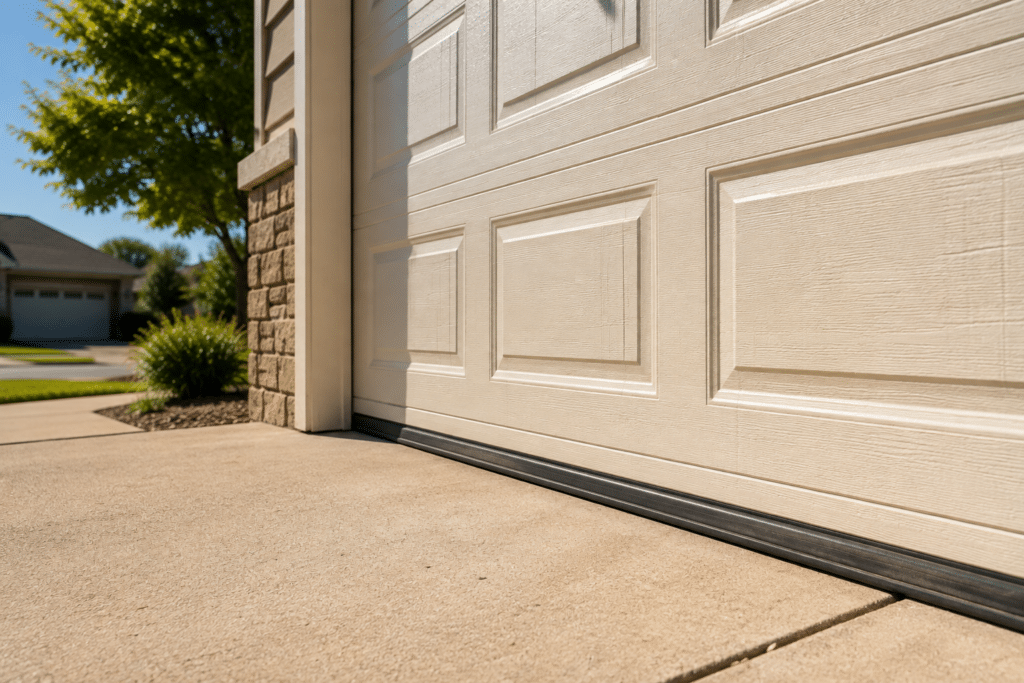
5. The Bottom Seal Glues Itself to Your Driveway
The rubber or vinyl weatherstrip along the bottom of your door softens in heat. On hot concrete – or fresh asphalt – a soft seal will literally tack itself to the surface.
What you notice: The door hesitates or lurches right at the start of opening, like something is holding it down. Sometimes you hear a peeling sound. Over a season the seal tears or deforms.
What to do: Check the seal for tears, flattened sections, and places where it has pulled out of the retainer. A worn bottom seal is an inexpensive replacement and worth doing anyway, since it also keeps out water, dust, and every insect that comes with summer.
6. Your Remote Battery Is Dying Faster Than You Think
Heat speeds up the chemical discharge inside a battery. A remote clipped to the visor of a car parked in the sun is sitting in one of the hottest spots on your property, and it will not last as long as the one on your keychain.
What you notice: Shorter range, so you have to get closer before it works. Intermittent response. Two or three presses to get anything.
What to do: Replace the battery first. It costs a couple of dollars and solves this most of the time.
If a fresh battery does not restore the range, look at two things. The antenna wire on the opener should hang down freely rather than being coiled up or tucked into the housing. And if you have recently changed the light bulb in your opener, that may be your answer – Chamberlain, which builds LiftMaster and Chamberlain openers, lists reduced remote range as a symptom of an incompatible bulb and specifies which types their openers are tested with. Swapping to a bulb rated for garage door openers fixes it.

7. Humidity Rusts What Heat Already Stressed
Summer heat rarely travels alone. Humidity comes with it, and humidity is what corrodes the springs, cables, rollers, and hinges that heat has already been working on. Surface rust on a spring is not cosmetic – it creates friction between the coils and stress points where the steel will eventually fail.
Got a wood or wood composite door? Humidity swells the panels too. A door that expands in its opening binds against the jamb and stops tracking cleanly.
What you notice: Orange staining on springs or cables. A wood door that sticks, or one with paint blistering and peeling on the sun-facing side.
What to do: Lubrication helps prevent rust on the moving hardware, which is another reason to do step two. But frayed cables and rusted springs need a technician, not a can of spray.
For wood doors, keeping the finish intact is the whole game. Bare wood drinks moisture, and the unfinished bottom edge is almost always where the trouble starts.
8. Something Moved Into Your Opener
This one surprises people, but it comes up on service calls all summer.
Wasps build nests inside opener housings and rail assemblies. Mice and squirrels get into garages and chew through wiring insulation. Spiders build webs directly across photo eye lenses, which causes the reversal problem back in section three.
What you notice: Electrical behavior you cannot explain. An opener that responds inconsistently. Visible nesting material near the motor housing.
What to do: Look before you reach up there. If there is a wasp nest, deal with that first. Then check the bottom seal and the gaps around the door frame, because that is usually the way in.
Chewed wiring is a technician job. It is an electrical hazard and it is easy to misdiagnose as something else.
9. Your Garage Is an Oven, and the Door Might Be the Reason
If your garage is unbearable in August and the room above or beside it never quite cools down, look at the door itself. A single layer steel door with no insulation is basically a large uninsulated panel facing the sun.
Insulated doors are rated by R-value, where a higher number means more resistance to heat transfer. One thing worth knowing before you compare products: the Door and Access Systems Manufacturers Association explains that a published R-value describes a section of the door rather than the whole installed assembly. Two doors advertising the same number can perform differently once they are hanging in an opening, so ask what a specific door is actually rated on.
Insulation will not turn your garage into a conditioned space, and anyone who tells you otherwise is overselling. What it does is meaningfully cut heat transfer into the garage and the rooms next to it, and make the door quieter and more rigid while it is at it.
If your door is twenty years old, loud, and uninsulated, that is a different conversation from a repair. Worth asking a technician whether fixing it or replacing it makes more sense for the door you actually have.
The One Thing You Should Not Touch
Everything above has some level of homeowner involvement. Springs do not.
The springs above your door hold enough stored energy to lift a 150 to 400 pound door, and they hold it under extreme tension whether the door is up or down. When one lets go while someone is working on it, people get seriously hurt. This happens every year. Doing it properly takes specific winding bars, correctly cycle-rated parts, and training.
Stop using the door and stop pressing the remote if you see any of these:
- A loud bang from the garage
- A visible gap in a spring coil
- A door that suddenly feels much heavier than it did
- A door that opens crooked
- A door that will not stay up on its own
Our complete guide to spring repair walks through each of those in more detail. And the reason to stop pressing the remote is that running the opener against a broken spring damages the opener too, which turns one repair into two. An OGD® technician can inspect and replace springs safely in a single visit.
A Ten Minute Summer Checkup
Do this once during the hottest stretch of the year and you will catch most problems before they turn into emergencies.
- Watch and listen. Run the door through one full cycle and pay attention. New noises and hesitations are information.
- Test the balance. With the door closed, pull the emergency release cord to disconnect the opener. Lift the door by hand to about waist height and let go. A balanced door stays roughly where you put it. If it slams down or shoots up, the springs need attention. Reconnect the opener when you are done.
- Test the reversal. Lay a two by four flat on the floor in the door’s path and close the door. It should touch the wood and reverse immediately – the same test CPSC recommends. If it does not reverse, that is a safety failure and it needs service now.
- Test the photo eyes. With the door closing, wave something through the beam near the floor. It should stop and reverse.
- Clean and lubricate. Wipe the tracks and lenses, then lubricate hinges, rollers, springs, and bearings.
- Look at the hardware. Check for loose bolts, rust, frayed cables, and rollers that stick instead of roll. Note anything questionable – but leave springs and cables to a pro.
Frequently Asked Questions
Can hot weather really stop a garage door from working?
Yes, several different ways. Heat expands metal and tightens the clearances the door needs to move. It thins or bakes your lubricant. It triggers thermal shutoff in opener motors. It drains remote batteries faster. And low summer sun angles interfere with the safety sensors. None of those are failures of the door itself, but any one of them will keep it from working normally.
Why does my garage door reverse before it closes in the summer?
Usually the photo eye sensors. Dust, spider webs, sun glare at a low angle, or a bracket knocked slightly out of alignment will all break the beam and send the door back up. Clean both lenses and check that the indicator lights are steady before you assume something bigger is wrong. If it keeps happening, opener repair covers sensor realignment.
Do garage door springs break more in summer or winter?
Winter, generally. Cold makes spring steel more brittle, which is why spring failures cluster on the coldest mornings of the year. Summer contributes differently – heat and humidity accelerate rust and break down the lubrication that keeps springs from wearing early. Summer is also higher usage season, and springs are rated in cycles rather than years.
What should I lubricate on my garage door?
Hinges, roller stems, springs, bearing plates, and the opener rail if the manufacturer calls for it. Use a garage door lubricant, lithium or silicone based. Do not lubricate inside the tracks – rollers need to roll rather than slide, and grease in the track just collects grit. And skip WD-40, which is a solvent rather than a lubricant.
My opener quits after a few uses on hot days. Is it dying?
Maybe, but check the door’s balance first. Thermal shutoff means the motor got too hot, and the usual reason is that it is lifting more weight than it was designed to lift because the springs have lost tension. Replace the opener without fixing the balance problem and you will likely be replacing a second one.
Is an insulated garage door worth it for heat, not just cold?
It works in both directions, since insulation resists heat transfer either way. An insulated door reduces how much summer heat moves into the garage and into rooms next to or above it, and it runs quieter with more rigid panels. It will not make an unconditioned garage cool, so set expectations accordingly.
How often should a garage door be serviced?
Once a year for most homes, with your own visual check and lubrication in between. Doors that cycle many times a day, or that serve as the household’s main entrance, benefit from more attention because springs and rollers are rated in cycles rather than years.
Why does my remote only work up close now?
Start with the battery, especially if the remote lives in a hot car. If a fresh battery does not restore the range, check that the antenna wire hangs freely from the opener rather than being coiled or tucked away. Then consider whether a recently installed LED bulb is interfering – manufacturers publish guidance on which bulbs are safe to use in an opener, and swapping the bulb is a common, cheap fix.
Get Ahead of It Before Fall
Most of what goes wrong with a garage door in August was fixable in July. A door that is squealing, hesitating, or reversing is telling you something – and the parts that summer heat stresses are the same parts that fail first when the temperature swings the other way in a few months.
OGD® serves homeowners across more than 60 markets in 14 states, with 24/7 customer service and free estimates on new doors. A tune-up covers the things you cannot safely check yourself: spring tension and balance, cable condition, roller and hinge wear, opener force settings, and a full safety reversal test.
Schedule a tune-up with OGD® and get your door looked at before the seasons turn.