If you’ve ever heard a sudden, cannon-loud bang coming from your garage- and then realized your garage door won’t open afterward- you’ve almost certainly experienced a broken spring. It’s one of the most common (and most stressful) things that can go wrong with a garage door, and it almost always happens at exactly the wrong moment: pulling out for work, getting home from vacation, on the coldest morning of the year.
This guide walks through everything homeowners need to know about garage door spring repair- what’s actually broken, how to spot the warning signs early, what repair typically costs, why this isn’t a DIY job, and what to expect when you call a pro.
The short version: garage door spring repair is the process of replacing a broken or worn spring so the door can open and close smoothly again. Most repairs take 1 to 2 hours when handled by a trained technician, and typical costs land in the few-hundred-dollar range depending on the spring type, your door size, and whether one or both springs are replaced.
How Much Does Garage Door Spring Repair Cost?
Cost is the first question most homeowners want answered, so we’ll start there. Pricing varies by region, door size, and which springs need to be replaced, but here’s what a typical residential repair looks like in 2026:
| Repair Type | Typical Cost Range | What’s Included |
|---|---|---|
| Single extension spring | $150 – $300 | One spring, labor, basic balance check |
| Both extension springs | $200 – $400 | Both springs replaced together (recommended) |
| Single torsion spring | $200 – $350 | One spring, labor, balance and tension adjustment |
| Both torsion springs | $300 – $550 | Both springs replaced together (recommended) |
| After-hours / emergency | Add $50 – $150 | Same-day or weekend service premium |
These ranges are general industry averages- your actual garage door spring repair quote depends on your specific door, the springs it requires, and where you live. Heavier doors (insulated, oversized, or wood) need higher-cycle springs, which cost more. Always get a written quote before any work starts.
One important note: if one of your springs has broken and you have a two-spring setup, most professionals recommend replacing both at the same time. The remaining spring is the same age as the one that just broke, so it’s likely close to failing too. Replacing them together costs less than two separate service calls and rebalances the door evenly.
6 Signs You Need Garage Door Spring Repair
Springs almost always give you some kind of signal before they fully fail- but the loudest signal is the one most people notice first. Here are the most common signs you need garage door spring repair:
- A loud bang from the garage. Often the first and most obvious sign. The spring snaps under tension and the sound is unmistakable.
- The door won’t open at all. Or it lifts a few inches and stops. The spring counterbalances the door’s weight, so without it, your opener is suddenly trying to lift the full weight of the door on its own.
- A visible gap in the spring. With the door closed, look at the spring above the door. A 2-inch gap where the coils used to be tight together means the spring has snapped.
- The door looks crooked when opening. One side higher than the other usually points to a broken spring or a cable issue.
- The opener strains, hums, or stops mid-lift. If your opener sounds like it’s working harder than usual, your springs may be weakening even before they fully snap.
- The door slams shut faster than usual. A door that drops too quickly is a serious safety risk- and almost always a spring problem.
If you’re seeing any of these signs, stop using the door. Pressing the remote again can damage the opener motor, bend the tracks, or strip the gears. The fix is a quick garage door repair call- not another button press.
Types of Garage Door Springs (and Why It Matters for Repair)
Not all garage door springs are the same, and the type you have affects both the repair process and the cost. There are two main types on residential doors:
| Spring Type | Where It’s Mounted | How It Works |
|---|---|---|
| Torsion springs | Above the door, on a metal shaft running parallel to the top of the opening | Twist (torque) to store energy and lift the door. Usually one or two per door. |
| Extension springs | Along the horizontal tracks on either side of the door | Stretch and contract to counterbalance the door’s weight. Usually two per door. |
Torsion springs are more common on newer homes and on heavier doors. They tend to last longer, are safer when properly installed, and are generally the better long-term option- but they cost a bit more to replace. Extension springs are typical on older homes and lighter single-car doors.
If you’d like to dig deeper into how each type works (and which is the right choice if you’re upgrading), we have a separate guide on how to choose the right garage door springs for your home that covers both options in detail.
Why Garage Door Springs Break
Springs are wear items. They’re built to last a long time, but they’re not built to last forever. Here’s what shortens their lifespan:
- Normal cycle wear. Most residential springs are rated for around 10,000 cycles- one cycle being one open and one close. If you use your garage as your main entry to the home, you can hit that number in 7 to 10 years.
- Age. Even with light use, springs typically last 7 to 12 years before metal fatigue catches up.
- Rust and corrosion. Humidity, road salt, and unconditioned garages all speed up corrosion, which weakens the spring’s coils.
- Lack of lubrication. Without periodic lubrication, friction wears the metal down faster and accelerates rust.
- Temperature swings. Springs are most likely to break on cold mornings, when the metal is brittle and the door is heaviest.
- The wrong spring for the door. If a previous installer used a spring rated for a lighter door, it’ll wear out years sooner than it should.
The Door & Access Systems Manufacturers Association (DASMA)– the industry’s standards body- publishes detailed technical data sheets on spring cycle life and proper sizing. These are the same standards reputable installers follow when sizing replacement springs for your door.
Can You Repair a Garage Door Spring Yourself?
The short answer: please don’t.
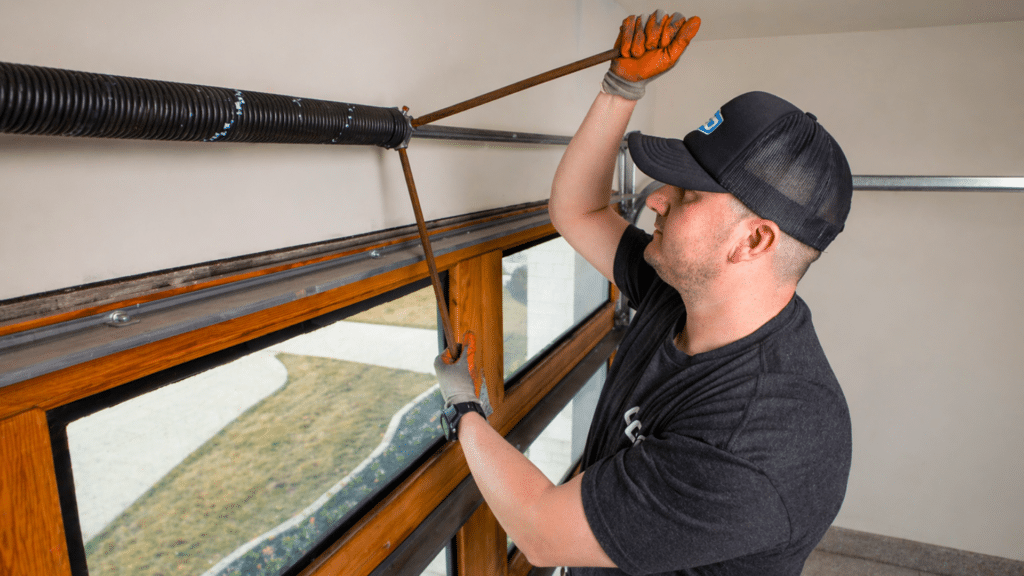
This is the one section of this guide we’re going to be very direct about, because the stakes are real. A torsion spring on a typical residential garage door stores hundreds of pounds of force when the door is closed. If that energy releases unexpectedly during a DIY repair- because the wrong tool slipped, a winding bar wasn’t seated correctly, or the spring was wound past its limit- it can cause serious injuries to hands, eyes, and faces. Extension springs carry similar risks because of the cables and stored tension involved.
Beyond the safety issue, there are practical reasons to leave it to a pro:
- Specialized tools. Winding bars, vise grips, and torque wrenches sized specifically for the spring’s wire gauge.
- Correct spring sizing. Springs are sized by wire gauge, inside diameter, and length. Guess wrong and the door is unbalanced or the spring fails early.
- Door balancing. After replacement, the door has to be tested and rebalanced so the opener doesn’t burn out from carrying too much weight.
- Insurance and warranty. Many homeowners insurance policies and garage door warranties don’t cover damage caused by DIY repairs.
The U.S. Consumer Product Safety Commission tracks injuries from garage door components and openers, and recommends that any time a door is unbalanced or stuck, it should be serviced by a qualified professional. A professional repair takes about an hour and costs a fraction of an emergency room visit.
What to Expect from a Professional Spring Repair
A standard professional spring repair generally follows the same six-step process:
- Inspection. The technician checks the springs, cables, drums, rollers, hinges, and tracks to confirm the spring is the actual problem (and that nothing else needs attention at the same time).
- Spring removal. The broken spring (and the partner spring, if you’re replacing both) is carefully unwound and detached.
- New spring installation. The correctly-sized replacement spring is installed and wound to the proper tension for your specific door.
- Balance test. The technician disconnects the opener and lifts the door manually to confirm it’s balanced- a properly balanced door should hold its position about halfway up.
- Lubrication and adjustment. All moving parts are lubricated, and the opener is reconnected and tested.
- Test cycles. The door is opened and closed several times to confirm everything is working smoothly before the technician leaves.
A reputable installer should also walk you through what they replaced, what other parts may need attention soon, and what warranty (if any) covers the new springs and the labor.
How Long Does Garage Door Spring Repair Take?
Most spring repairs take 1 to 2 hours from arrival to test cycle. The actual replacement is the fastest part- the rest is inspection, balancing, lubrication, and making sure the opener is working correctly with the new spring tension.
Timing exceptions:
- Multi-door homes (3-car or 4-car garages) take longer if more than one door needs work.
- Older systems with worn cables, drums, or rollers may need additional parts replaced at the same time.
- Custom-sized doors sometimes require special-order springs, which can add a day or two if they’re not on the truck.
How to Prevent Garage Door Springs from Breaking Early
You can’t make a spring last forever, but you can absolutely add years to its life with a little routine attention:
- Lubricate twice a year. Use a silicone-based or lithium garage door lubricant on the springs, hinges, rollers, and tracks. Skip WD-40- it’s a degreaser, not a lubricant, and it actually strips the protective coating off your hardware.
- Listen for changes. If your door starts sounding louder, sluggish, or jerky, that’s your cue to schedule a tune-up before something breaks.
- Test the balance once a year. With the door closed, pull the red emergency release on your opener and lift the door manually. It should lift smoothly and hold its position around the halfway point. If it slams down or shoots up, the springs are out of balance.
- Don’t ignore small problems. A single noisy roller or sticky hinge puts extra strain on the springs every time the door cycles.
- Replace both springs at the same time. When one breaks, the other is on borrowed time- replace them together and you reset the clock on both.
If the spring failure also stressed your opener, it’s worth having that looked at the same visit. Strained openers don’t always fail right away- they often die a few weeks later. Our team handles garage door openers and complete door systems, so it can usually be diagnosed in the same trip.
When to Call for Same-Day Garage Door Spring Repair
Some situations really can’t wait. Call for same-day or emergency service when:
- Your vehicle is trapped inside the garage and you need to get to work, school, or an appointment.
- The door is stuck partially open, leaving your home and contents exposed.
- Cables are dangling, frayed, or off the drums- these can cause additional damage if the door is operated.
- The door has fallen or is hanging at an angle.
In those situations, do not try to force the door, manually lift it, or operate the opener. Each of those can turn a simple spring repair into a full system replacement.
Frequently Asked Questions
Should I replace one spring or both at the same time?
If your door uses two springs, replacing both at the same time is almost always the right call. The unbroken spring has the same age and cycle wear as the broken one, so it’s likely near the end of its life. Replacing both together avoids a second service call within a year or two, and it keeps the door balanced.
How long do garage door springs last?
Most residential springs are rated for about 10,000 cycles, which works out to roughly 7 to 12 years for the average household. Heavy daily use shortens that range; light use can extend it. High-cycle springs rated for 20,000 to 30,000 cycles are available if you want to go longer between replacements.
Can I open my garage door manually with a broken spring?
Technically yes, but it’s not a good idea. A typical garage door weighs 150 to 250 pounds, and that full weight is on you the moment the spring fails. If you absolutely have to move it (to get a vehicle out, for example), have at least one helper, lift evenly, and prop the door fully open with a sturdy support before walking under it. Then call a pro.
Will a broken spring damage my garage door opener?
It can, especially if you keep pressing the remote after the spring fails. The opener is designed to move a counterbalanced door, not lift the full weight on its own. Strained gears, stripped sprockets, and burned-out motors are common follow-on damage. Stop using the opener as soon as you suspect a spring problem.
Is garage door spring repair covered by homeowners insurance?
Usually no- normal wear and tear isn’t covered by standard homeowners policies. Damage caused by a covered event (a fallen tree, a vehicle impact, certain storms) might be covered. Check with your specific insurer if there’s a cause beyond normal wear.
What’s the difference between spring repair and spring replacement?
In practice, they’re usually the same thing. Springs aren’t really repaired- when one breaks or wears out, it’s replaced with a new one. The terms get used interchangeably across the industry.
Need Garage Door Spring Repair? OGD® Is Ready to Help.
A broken spring is one of the most common garage door issues homeowners run into- and one of the most stressful, because it usually happens at the worst possible moment. The good news: it’s also one of the fastest fixes when you call the right team.
OGD® has been serving homeowners across the country for more than 20 years, and our technicians repair garage door springs every day. Visit our garage door spring repair page to see what’s included, or jump straight to finding your nearest OGD location for same-day or next-day service.Contact us any time to schedule a visit, request a quote, or ask a question. And if you’re planning ahead instead of dealing with a broken spring right now, our team also handles garage door installation– sometimes a new spring is the right answer, and sometimes a full upgrade just makes more sense.