If your garage door suddenly stopped working, you may have just heard a loud bang and found a broken spring. If your door is moving slower than usual, feels heavier, or won’t stay open, a worn or failing spring is usually the culprit.The garage door spring is the most hardworking part of your entire door system and when it goes, your door goes with it. This guide covers everything homeowners need to know: how springs work, the difference between torsion and extension springs, how long they last, what replacement costs, and why this is one repair best left to a professional. If you need help now, you can schedule a spring repair with OGD® anytime.
What Does a Garage Door Spring Do?
Your garage door can weigh anywhere from 100 to 400 pounds or more. The spring is what makes lifting that weight feel effortless – for both you and your garage door opener.
Springs work by storing mechanical energy when the door closes and releasing it when the door opens. This counterbalance system is what allows a relatively small motor – or one hand to raise a very heavy door smoothly and consistently.
Without a functioning spring, your opener is working against the full weight of the door. That quickly burns out motors, and in the case of a snapped spring, brings your door to a sudden and complete stop.
Types of Garage Door Springs: Torsion vs. Extension
There are two main types of garage door springs: torsion springs and extension springs. The type your home has depends on your garage door’s size, weight, and the hardware system it was built with.
Torsion Springs
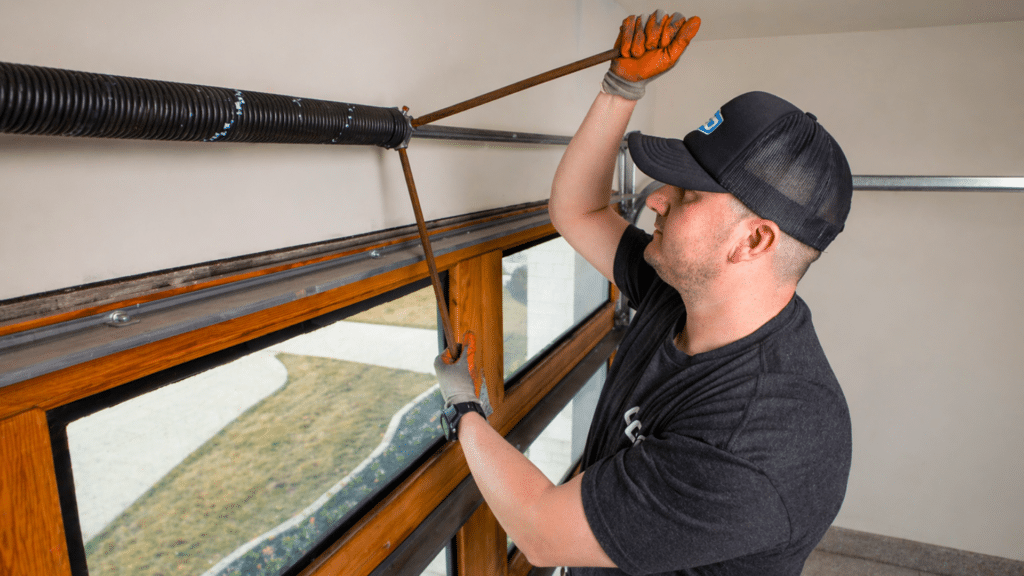
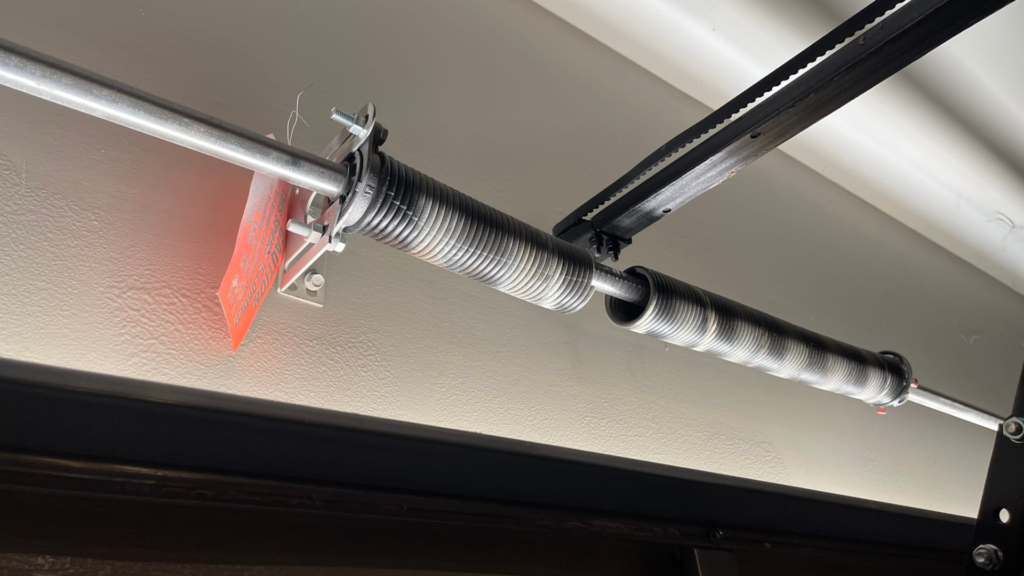
Torsion springs are mounted horizontally above the garage door opening on a metal shaft. When the door closes, the spring winds up and stores tension. When the door opens, the spring unwinds and releases that stored energy to help lift the door.
Common in: Heavier residential doors, two-car garage doors, and most modern installations.
Advantages:
- Longer lifespan with higher cycle ratings available
- More balanced lift -door rises evenly across the full width
- Contained on the shaft when they break -lower risk of a flying component
- Better suited for heavier doors and frequent use
Extension Springs
Extension springs run along the horizontal tracks on either side of the door, above the door’s path of travel. As the door closes, the springs stretch and extend, storing energy. As the door opens, they contract and help pull the door up.
Common in: Single-car garages, lighter doors, and older installations.
Advantages:
- Lower upfront cost
- Simpler design and widely available
- Can be equipped with a safety cable to contain a broken spring
Torsion vs. Extension Springs: Quick Comparison
| Feature | Torsion Spring | Extension Spring |
| Location | Above the door opening, on a horizontal shaft | Along the side tracks on each side of the door |
| How it works | Winds and unwinds to lift and lower the door | Stretches and contracts to assist door movement |
| Best for | Heavier doors, two-car garages, modern installs | Lighter doors, single-car garages, older systems |
| Typical lifespan | Longer cycle life -higher-cycle options available | Moderate cycle life |
| Safety when broken | Contained on shaft -lower risk of flying parts | Can be hazardous without a safety cable installed |
| Lifting quality | Smooth, even, balanced lift | Can cause slight uneven movement |
| Typical cost | Generally higher due to hardware and complexity | Generally lower upfront cost |
Not sure which type you have? Look above your door opening. If you see a horizontal bar with a spring coiled around it, that’s a torsion spring. If you see springs running lengthwise along the sides of the door tracks, those are extension springs. Still unsure? An OGD technician can identify and inspect your spring system in one visit.
Signs Your Garage Door Spring Is Broken or Failing
Garage door springs don’t always snap suddenly -though they can. More often, they wear down gradually and give warning signs before they fail completely.
Watch for these signs:
The door won’t open at all.
A fully broken spring is the most common reason a garage door opener runs but the door stays down.
A loud bang from the garage.
A torsion spring snapping under tension sounds like a gunshot. If you hear this, stop trying to use the door.
The door opens unevenly or tilts to one side.
One spring may have failed while the other hasn’t -common in double-spring setups.
The door feels unusually heavy.
If your door is significantly harder to lift manually than normal, the spring is losing tension.
A visible gap or separation in the spring coil. A gap in a torsion spring is a clear, visible sign of a break.
The door reverses or won’t stay open.
Springs losing tension can cause the door to drift or fail to hold its raised position
Squeaking, grinding, or unusual sounds.
Worn springs can create metallic noises during operation that weren’t there before.
If you notice any of these signs, stop using the door immediately. Continuing to operate a door with a compromised spring puts extra strain on your opener and creates a safety hazard. Contact OGD® to schedule a spring inspection.
How Long Do Garage Door Springs Last?
Garage door springs are rated by cycle life -one cycle equals one complete open-and-close movement. According to the Door & Access Systems Manufacturers Association (DASMA), proper sizing and installation are the key factors in maximizing spring longevity.
- Standard springs are typically rated for around 10,000 cycles
- High-cycle springs are available in 25,000, 50,000, or higher ratings -a smart upgrade for busy households
What Does That Mean in Years?
A household that opens and closes the garage door four times per day goes through about 1,460 cycles per year. At that rate:
- A 10,000-cycle spring lasts approximately 6–7 years
- A 25,000-cycle spring lasts approximately 17 years
Factors that shorten spring life include:
- Infrequent or no lubrication
- Rust and corrosion from humidity or temperature fluctuations
- Extreme temperatures in uninsulated garages
- Improper spring size or tension from a previous installation
- Higher-than-average daily usage
Pro tip: If one spring breaks and the other is the same age, consider replacing both at the same time. The second spring has identical wear and is likely to fail soon -replacing both in one visit saves time and a second service call.
Garage Door Spring Replacement Cost
Garage door spring replacement is one of the most common service calls in the industry -and the cost depends on several variables.
What affects the price:
- Spring type (torsion vs. extension; standard vs. high-cycle)
- Number of springs (single spring vs. double spring systems)
- Door size and weight (heavier doors require heavier-duty springs)
- Labor and service fees (including after-hours or emergency service)
- Your local market and regional labor rates
For a precise estimate based on your specific door, contact OGD® directly. Our technicians assess your system and provide transparent pricing before any work begins.
What’s typically included in a professional spring replacement:
- Removal of the broken spring
- Installation of the correct replacement spring(s)
- Spring tension adjustment and balance testing
- Safety inspection of cables, drums, and connected hardware
- Test cycles to confirm proper, smooth operation
Can You Replace a Garage Door Spring Yourself?
This is one of the most-searched questions about garage door springs -and the honest answer is: this is not a safe DIY project for most homeowners.
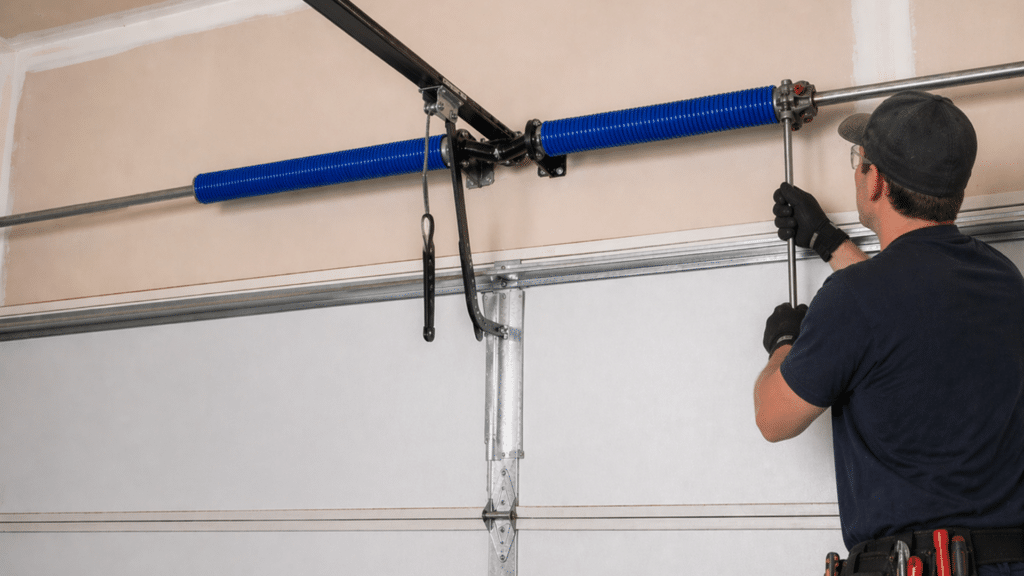
Garage door springs are under extreme tension -sometimes hundreds of pounds of stored mechanical force. When a spring is installed or removed, that tension must be carefully wound or unwound using specialized winding bars and precise technique. The U.S. Consumer Product Safety Commission recognizes garage doors as one of the leading sources of home product-related injuries -and spring failure is a primary cause. A slip, a miscalculation, or the wrong tool can cause the spring to release suddenly, resulting in severe injury, vehicle damage, or door system damage.
Professional garage door technicians are trained specifically for this task. They carry the correct tools, the right spring specifications for your door, and the hands-on experience to complete the job safely every time.
DIY spring replacement risks include:
- Severe injury from a sudden spring release
- Installing the wrong spring size or tension -straining your opener and hardware
- Improper winding that causes early failure or imbalanced operation
- Potential voiding of your garage door or opener warranty
If you want to help before the technician arrives, note your door’s brand, size, and approximate age. That lets your OGD tech arrive prepared with the right hardware on the first visit.
How a Professional Chooses the Right Spring
When an OGD technician arrives for a spring replacement, they don’t simply grab the nearest spring off the truck. They measure and match the correct spring to your specific door.
What goes into spring selection:
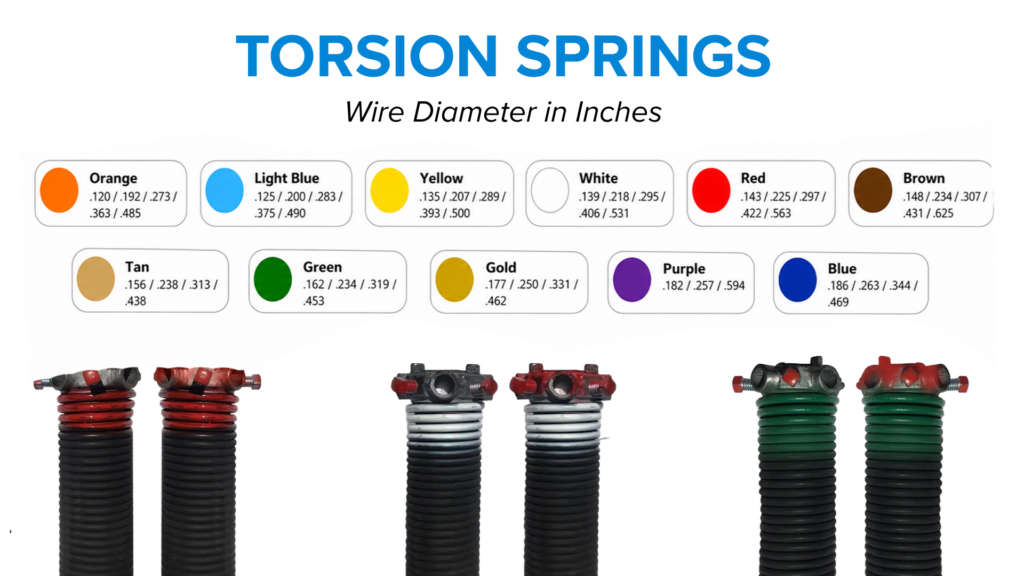
- Wire diameter -heavier doors need thicker wire to generate the correct torque
- Inside diameter -must match the shaft or drum dimensions of your specific door system
- Length of the spring -affects lift cable travel and how much tension the spring delivers
- Door weight -the most important variable; springs must counterbalance the door’s actual weight
- Number of turns -the winding calculation that determines how much lifting force the spring provides
- Cycle rating -matching your usage level to the right lifespan
Getting this wrong doesn’t just mean premature spring failure. An improperly tensioned spring creates uneven lifting, excess strain on your opener motor, and real safety hazards. Matching the spring to the door -not just replacing what was there before -is a technical job, not a parts swap.
Maintenance Tips to Extend Garage Door Spring Life
You can’t make a spring last forever, but proper care helps you get the most out of its rated cycle life.
- Lubricate twice a year. Apply a garage door-specific lubricant -not WD-40, which is a solvent, not a lubricant -to the spring coils. This reduces metal fatigue and slows rust.
- Keep the door balanced. An unbalanced door puts uneven stress on both springs. Disconnect the opener and lift the door to waist height -it should hold in place with minimal drift.
- Inspect for rust. Surface rust accelerates wear. Lightly rusted springs can be treated with lubricant; heavily corroded springs should be replaced.
- Don’t ignore small problems. A slow door, uneven lifting, or unusual sounds often mean a spring is nearing end of life. Catching it before full failure is safer and far less disruptive.
- Schedule an annual inspection. A professional tune-up catches spring wear early and also checks cables, rollers, and hardware.
When to Call OGD® for Garage Door Spring Repair
If your garage door spring has snapped, your door isn’t opening, or you’re hearing sounds that weren’t there before, it’s time to call a professional.
OGD® provides garage door spring repair and replacement across our service areas, with technicians trained to diagnose your specific door system and match the right replacement spring the first time.
We recommend calling OGD when:
- Your garage door won’t open or close
- You’ve heard a loud bang from your garage
- Your door opens unevenly or feels unusually heavy
- Your spring has a visible gap or separation in the coil
- It’s been 7 or more years since your last spring replacement
Don’t wait until a worn spring becomes a complete failure or a safety hazard. Schedule your garage door spring repair with OGD® today.
Frequently Asked Questions About Garage Door Springs
How do I know if my garage door spring is broken?
The most obvious sign is a garage door that won’t open. Look for a visible gap or separation in the spring coil, or recall a loud bang you heard from the garage. A door that feels unusually heavy when lifted manually, or one that opens unevenly, are also common indicators. If you notice any of these signs, stop using the door and contact OGD for a professional spring inspection, OGD® is trusted by thousands of customers.
What is the difference between torsion and extension garage door springs?
Torsion springs are mounted horizontally above the garage door opening and work by twisting and unwinding to lift the door. Extension springs run along the side tracks and work by stretching and contracting. Torsion springs are generally better suited for heavier doors, offer a smoother lift, and tend to last longer. Extension springs are common in lighter, single-car garage doors and typically cost less.
How long do garage door springs last?
Most standard garage door springs are rated for approximately 10,000 cycles -one open and one close equals one cycle. For a household that uses the door four times per day, that’s roughly 6–7 years. High-cycle springs rated at 25,000 or more cycles are also available and offer a significantly longer service life.
How much does garage door spring replacement cost?
The cost varies based on spring type (torsion vs. extension), the number of springs, door size and weight, and local labor rates. Contact OGD® directly for an accurate service estimate based on your specific door system.
Can I replace a garage door spring myself?
This is not recommended for most homeowners. Garage door springs are under significant mechanical tension, and improper removal or installation can result in serious injury. The U.S. Consumer Product Safety Commission recognizes garage doors as one of the leading sources of home product-related injuries. Professional technicians have the training, tools, and experience to complete this job safely.
Should I replace both garage door springs at the same time?
Yes, in most cases. If you have two springs and one breaks, the second has the same amount of wear and is likely to fail soon. Replacing both at the same time saves a second service call and ensures balanced, even performance from your door.
What happens if I ignore a broken garage door spring?
A broken spring puts your garage door out of service and creates a safety hazard. Continuing to run your opener against a broken spring can burn out the motor. In some situations, a door with a failed spring can drop unexpectedly. Stop using the door and schedule a repair as soon as possible.
How do I know what size spring I need?
Spring sizing depends on the door’s weight, dimensions, and hardware configuration -including wire diameter, inside diameter, and overall length. This is why a professional assessment matters. OGD technicians measure these variables on-site and match the correct spring to your specific door system.